
Location:
United States
Networks:
Mitchell S. Nicholson
Mason
THE BIBLE OF THE ETHIOPIANS
Luca Donald
English Audiobooks
INAudio Audiobooks
Description:
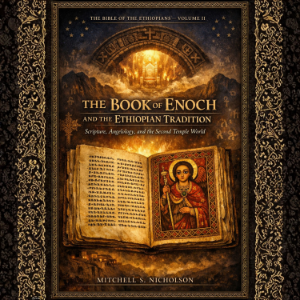
The New Testament quotes a book most Christians have never read. The Dead Sea Scrolls proved it was real. One church never stopped reading it. The letter of Jude quotes 1 Enoch by name as prophetic Scripture. Eleven Aramaic manuscripts of the same text were found among the Dead Sea Scrolls. And yet most Christians have never heard of it — because the Western church gradually stopped copying it, and the text disappeared. The Ethiopian Orthodox Tewahedo Church never stopped. For fifteen centuries, the monks of Tigray and Lalibela and Lake Tana have read 1 Enoch as the fourteenth book of their Old Testament — canonical Scripture, chanted in the liturgy, integrated into a theology more coherent with the New Testament's own world than the traditions that excluded it. What you have been reading the New Testament without: the pre-existent Son of Man whose portrait in the Similitudes provides the most precise background for Jesus's most frequent self-designation. The canonical definition of Michael, Gabriel, Raphael, and Uriel. The imprisoned spirits of 1 Peter 3:19 — the bound Watchers of 1 Enoch 10. The social ethics standing behind the Lucan Beatitudes and James 5. The Ethiopian church has been right about 1 Enoch for fifteen centuries. The Dead Sea Scrolls agreed. The New Testament agreed. The rest of the world is finally catching up. Duration - 10h 7m. Author - Mitchell S. Nicholson. Narrator - Mason. Published Date - Thursday, 01 January 2026. Copyright - © 2026 Mitchell S. Nicholson ©.
Language:
English
Opening Credits
Duration:00:00:12
A NOTE ON TRANSLITERATION
Duration:00:01:56
PREFACE: Why 1 Enoch Matters Now
Duration:00:08:37
PART ONE: THE TEXT AND ITS WORLD
Duration:00:00:03
Chapter 1 — Enoch: The Man, the Myth, the Mystery
Duration:00:00:23
1.1 Two Verses and a Thousand Years of Speculation
Duration:00:04:56
1.2 Walking with God: The Language of Exceptional Piety
Duration:00:03:07
1.3 The Number Seven and Its Significance
Duration:00:03:09
1.4 Enoch in the Hebrew Bible Beyond Genesis
Duration:00:02:12
1.5 Sirach and the First Canonical Reflection
Duration:00:02:48
1.6 The New Testament and the Prophet Enoch
Duration:00:04:29
1.7 Why Enoch and Not Moses? The Question of Revelatory Authority
Duration:00:04:04
1.8 Enoch in the Ethiopian Tradition: The Living Ancestor
Duration:00:03:08
1.9 The Seventh from Adam: A Conclusion and a Beginning
Duration:00:02:34
Chapter 2 — Five Books in One: The Architecture of 1 Enoch
Duration:00:02:17
2.1 The Book of the Watchers (Chapters 1–36)
Duration:00:04:30
2.2 The Similitudes (Chapters 37–71)
Duration:00:05:12
2.3 The Astronomical Book (Chapters 72–82)
Duration:00:03:20
2.4 The Book of Dreams (Chapters 83–90)
Duration:00:04:06
2.5 The Epistle of Enoch (Chapters 91–108)
Duration:00:03:39
2.6 One Book: The Ethiopian Church and the Canonical Whole
Duration:00:02:52
Chapter 3 — Before the Bible: 1 Enoch and Second Temple Judaism
Duration:00:01:42
3.1 Dating the Five Sections: What We Know and How We Know It
Duration:00:06:25
3.2 A Tradition Older Than Its Name
Duration:00:02:45
3.3 Two Revelations, Two Traditions
Duration:00:03:50
3.4 The Community by the Dead Sea
Duration:00:02:47
3.5 What the Qumran Manuscripts Actually Tell Us
Duration:00:03:10
3.6 Why Qumran Loved Enoch
Duration:00:04:01
3.7 The Missing Similitudes and What Their Absence Means
Duration:00:05:07
3.8 After Qumran: The Narrowing of the Canon
Duration:00:03:36
3.9 Second Temple Judaism and the Ethiopian Canon
Duration:00:03:09
Chapter 4 — From Aramaic to Ge'ez: The Transmission History
Duration:00:02:30
4.1 The Original Languages
Duration:00:03:48
4.2 The Greek Tradition: Brilliant, Fragmentary, and Decisive
Duration:00:06:46
4.3 The Ge'ez Translation: When, How, and From What
Duration:00:05:10
4.4 What the Dead Sea Scrolls Confirmed
Duration:00:03:29
4.5 R. H. Charles and the Construction of the Critical Text
Duration:00:04:22
4.6 The Knibb-Ullendorff Edition: The Watershed
Duration:00:04:48
4.7 The Manuscript Tradition: Families, Witnesses, and What Survives
Duration:00:03:21
4.8 The Living Text: Transmission as Theological Practice
Duration:00:04:22
PART TWO: THE FIVE BOOKS: THEOLOGICAL COMMENTARY
Duration:00:00:05
Chapter 5 — The Book of the Watchers: Angels, Giants, and the Origin of Evil
Duration:00:00:18
5.1 The Problem That Genesis Left Unsolved
Duration:00:04:35
5.2 The Descent: An Oath and a Catastrophe
Duration:00:04:33
5.3 The Cry of the Earth and the Divine Response
Duration:00:02:45
5.4 The Throne Room: Fire, Crystal, and the Voice That Spoke
Duration:00:03:45
5.5 The Origin of Evil: What the Watcher Myth Actually Argues
Duration:00:04:09
5.6 The Cosmic Journeys: Sheol, the Tree of Life, and the Ends of the Earth
Duration:00:04:21
5.7 The Ethiopian Reception: A Canon Completing Itself
Duration:00:05:24
Chapter 6 — The Similitudes: The Son of Man and the Hidden Messiah
Duration:00:00:16
6.1 The Section Nobody Expected
Duration:00:02:53
6.2 Three Parables, One Figure
Duration:00:03:56
6.3 Before the Mountains Were Made: Pre-existence and What It Means
Duration:00:03:18
6.4 Daniel 7, the New Testament, and the Conversation Nobody Finished
Duration:00:04:12
6.5 The Dating Debate: What It Settles and What It Doesn't
Duration:00:03:23
6.6 The Social Theology of Judgment and the Ethiopian Reading
Duration:00:05:14
Chapter 7 — The Astronomical Book: Sacred Time and the Solar Calendar
Duration:00:00:17
7.1 Why a Calendar Is a Theological Argument
Duration:00:04:25
7.2 The Oldest Section: What the Qumran Evidence Tells Us
Duration:00:03:48
7.3 The Architecture of the 364-Day Year
Duration:00:03:50
7.4 The Calendar War: Qumran, the Temple, and the Stakes of the Dispute
Duration:00:04:58
7.5 Jubilees and the Solar Calendar: A Canonical Alliance
Duration:00:04:19
7.6 The Ethiopian Calendar and Its Enochic Consonance
Duration:00:04:54
7.7 Sacred Time as a Form of Scripture
Duration:00:05:44
Chapter 8 — The Book of Dreams: History as Animal Apocalypse
Duration:00:00:24
8.1 Two Dreams and What They Cost
Duration:00:03:33
8.2 The First Dream: When the Earth Tried to Swallow Itself
Duration:00:02:35
8.3 The Symbolic Vocabulary: How to Read the Animals
Duration:00:04:12
8.4 From Adam to the Flood: The Primordial History in Animal Form
Duration:00:03:39
8.5 From the Patriarchs to the Exile: Watching the Flock Wander
Duration:00:06:05
8.6 The Maccabean Crisis and the White Bull: The Narrative Reaches Its Crisis and Its Hope
Duration:00:05:00
8.7 The Ethiopian Reading: The Animal Apocalypse and the Theology of Christ
Duration:00:10:24
Chapter 9 — The Epistle of Enoch: Ethics, Judgment, and the Apocalypse of Weeks
Duration:00:00:17
9.1 A Letter from Before the Flood
Duration:00:04:10
9.2 The Woes: A Reckoning Without Apology
Duration:00:06:23
9.3 The Apocalypse of Weeks: Ten Weeks and the Logic of History
Duration:00:07:14
9.4 Sin, Responsibility, and the Ethics of Knowledge
Duration:00:05:33
9.5 The Epistle and the Beatitudes: A Canonical Conversation
Duration:00:04:17
9.6 The Birth of Noah: A Miraculous Child and What He Promises
Duration:00:05:10
9.7 Ethiopian Liturgical Use: The Epistle as Living Scripture
Duration:00:08:39
PART THREE: 1 ENOCH IN THE ETHIOPIAN TRADITION
Duration:00:00:05
Chapter 10 — Canonical Enoch: How 1 Enoch Functions in the Ethiopian Bible
Duration:00:00:24
10.1 What It Means to Be the Fourteenth Book
Duration:00:05:29
10.2 The Canonical Argument of the Sequence
Duration:00:05:18
10.3 The Liturgical Life of 1 Enoch in Ethiopian Christianity
Duration:00:07:11
10.4 The Andemta Tradition: Ethiopian Scholarship Engages 1 Enoch
Duration:00:07:34
10.5 The Canonical Weight of 1 Enoch in Ethiopian Theological Argument
Duration:00:07:01
10.6 The Fetha Negest, the Sinodos, and the Institutional Reception of 1 Enoch
Duration:00:04:16
10.7 What It Means for a Community to Never Have Lost This Text
Duration:00:06:39
Chapter 11 — Enoch's Theology in Ethiopian Christianity
Duration:00:00:26
11.1 The Difference a Canon Makes
Duration:00:02:13
11.2 Angelology: Named, Ranked, and Canonically Defined
Duration:00:07:26
11.3 The Origin and Structure of Evil: Beyond the Garden
Duration:00:06:35
11.4 Sacred Time: The Theological Meaning of the Calendar
Duration:00:05:06
11.5 The Son of Man and Ethiopian Christology
Duration:00:05:37
11.6 Eschatology: The Specific Shape of What Is Coming
Duration:00:06:05
11.7 Integration: How Enochic Theology Lives in the Ethiopian Community
Duration:00:10:51
Chapter 12 — Enoch and Ethiopian Art: The Visual Tradition
Duration:00:00:42
12.1 Art as Theology: The Ethiopian Visual Tradition and Its Canonical Roots
Duration:00:04:34
12.2 The Garima Gospels and the Earliest Ethiopian Visual Theology
Duration:00:05:22
12.3 The Throne Room and the Angelic Hierarchy in Church Painting
Duration:00:07:14
12.4 Manuscript Illumination: The Enochic Visual Tradition in Codex Form
Duration:00:07:11
12.5 The Harag as Cosmic Vision: Border Decoration and the Enochic Imagination
Duration:00:04:25
12.6 Processional Crosses and the Visual Theology of Angelic Protection
Duration:00:05:34
12.7 Illuminating the Invisible: How Enochic Imagery Shapes Ethiopian Visual Consciousness
Duration:00:09:55
PART FOUR: 1 ENOCH AND THE WIDER WORLD
Duration:00:00:04
Chapter 13 — Enoch and the New Testament: The Unacknowledged Conversation
Duration:00:00:14
13.1 The Conversation That Was Never Supposed to Be Secret
Duration:00:03:41
13.2 Jude 14–15: The Explicit Quotation and What It Demands
Duration:00:04:26
13.3 The Son of Man Sayings: Jesus, the Similitudes, and the Most Contested Question in New Testament Studies
Duration:00:05:19
13.4 The Transfiguration, the Throne Room, and the Luminous Body
Duration:00:05:37
13.5 Paul and the Enochic World: Angels, Powers, and the Cosmic Christ
Duration:00:06:20
13.6 The Book of Revelation: A Throne Room Built on Enochic Foundations
Duration:00:06:07
13.7 1 Peter, Hebrews, and the Argument for Taking 1 Enoch Seriously
Duration:00:08:47
Chapter 14 — Enoch and the Church Fathers: Reception and Rejection
Duration:00:00:31
14.1 The Fathers Who Read Enoch and Were Not Embarrassed
Duration:00:04:12
14.2 Tertullian: The Most Passionate Defender
Duration:00:03:33
14.3 Origen and Clement: Engagement Without Resolution
Duration:00:04:15
14.4 The Watchers, Sexuality, and the Discomfort That Changed History
Duration:00:05:18
14.5 Jerome, the Hebraica Veritas, and the Decisive Canonical Move
Duration:00:04:12
14.6 Why Ethiopia Kept What the West Lost
Duration:00:04:25
14.7 The Patristic Rejection and Its Long Shadow
Duration:00:06:07
Chapter 15 — The Dead Sea Scrolls and the Vindication of Ethiopian Enoch
Duration:00:00:26
15.1 The Discovery That Changed Everything
Duration:00:03:29
15.2 The Eleven Manuscripts: What They Are and What They Contain
Duration:00:05:38
15.3 Milik's 1976 Edition: A Landmark and a Controversy
Duration:00:03:45
15.4 The Aramaic and the Ge'ez: What the Comparison Revealed
Duration:00:05:58
15.5 What the Scrolls Vindicated: The Specific Claims
Duration:00:05:02
15.6 What the Scrolls Left Open: The Limits of the Vindication
Duration:00:04:47
15.7 After the Scrolls: The Changing Scholarly Conversation and Its Implications
Duration:00:06:27
Chapter 16 — Enoch in the Modern World: Scholarship, Popular Culture, and the Ethiopian Church
Duration:00:00:29
16.1 The Strange Second Life of an Ancient Text
Duration:00:03:07
16.2 The Scholarly Tradition: From Laurence to the Hermeneia
Duration:00:07:49
16.3 The Popular Explosion: YouTube, Lost Books, and the Market for Hidden Knowledge
Duration:00:04:12
16.4 The Rastafari Tradition: A Canonical Seriousness the Academy Has Underestimated
Duration:00:06:47
16.5 The Digital Revolution and Manuscript Access
Duration:00:03:58
16.6 What the Ethiopian Tradition Teaches the World About Reading 1 Enoch
Duration:00:07:59
16.7 Fifteen Centuries of Fidelity and the Conversation That Is Only Beginning
Duration:00:05:04
EPILOGUE: The Seventh from Adam
Duration:00:16:17
A Request
Duration:00:03:54
Ending Credits
Duration:00:00:19