
Location:
United States
Networks:
Mitchell S. Nicholson
Digital Voice Mason G
THE BIBLE OF THE ETHIOPIANS
Luca Donald
English Audiobooks
INAudio Audiobooks
Description:
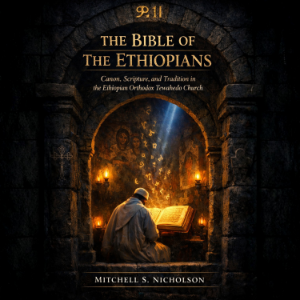
You've been reading an incomplete Bible your entire life. The world's oldest Christian church has been quietly guarding the rest of it for fifteen centuries. While Western Christianity debated which books belonged in Scripture, the Ethiopian Orthodox Tewahedo Church simply kept reading all of them — eighty-one books, preserved in the ancient language of Ge'ez, including texts the Dead Sea Scrolls proved were central to the world that produced Jesus. The Book of Enoch. The Book of Jubilees. Three uniquely Ethiopian books of the Maccabees. Apostolic books of church order embedded within the New Testament itself. Texts that survived, intact and canonical, only in Ethiopia — because nobody told these monks they were supposed to stop reading them. This is the book that has never been written: the first comprehensive English-language study of the world's largest Christian Bible. How the canon was formed, what makes it different, why it matters — and what it reveals about the history of Scripture that every other tradition has quietly agreed not to discuss. You will learn why Martin Luther declared full communion with the Ethiopian church in 1534 and why that encounter was erased from Protestant history. Why the Dead Sea Scrolls vindicated what Ethiopia canonized a thousand years earlier. Why the Garima Gospels — radiocarbon dated to 390 CE, never removed from their Tigrayan monastery — are the oldest illustrated Christian manuscripts on earth. And why the number eighty-one is not an accident. The Ethiopian church has been waiting, patiently, for the rest of Christianity to catch up. Read this book. Duration - 6h 32m. Author - Mitchell S. Nicholson. Narrator - Digital Voice Mason G. Published Date - Thursday, 29 January 2026. Copyright - © 2026 Mitchell S. Nicholson ©.
Language:
English
Opening Credits
Duration:00:00:11
Preface
Duration:00:05:16
PART ONE: THE CANON AND THE CHURCH
Duration:00:00:04
Chapter 1 — What Is the Ethiopian Bible?
Duration:00:01:13
1.1 The Question of Canon: A Working Definition
Duration:00:03:49
1.2 The Eighty-One Books: Structure and Organization
Duration:00:04:50
1.3 The Broader and Narrower Canons: Internal Debates
Duration:00:04:07
1.4 The Ethiopian Bible in World Context
Duration:00:05:09
Chapter 2 — The Ethiopian Orthodox Tewahedo Church: History, Theology, and Canonical Authority
Duration:00:00:28
2.1 Christianity in Aksum: Before the Official Conversion
Duration:00:04:31
2.2 Frumentius, Aedesius, and the Baptism of Ezana
Duration:00:04:40
2.3 The Nine Saints: The Second Christianization
Duration:00:06:26
2.4 The Alexandrian Connection: The Coptic Patriarchate and Ethiopian Ecclesiology
Duration:00:06:08
2.5 Autocephaly and Independence: The Tewahedo Church from 1959 to the Present
Duration:00:04:17
2.6 How the Church Determines Scripture: Authority, Council, and Tradition
Duration:00:06:11
PART TWO: THE GE'EZ LANGUAGE AND THE MANUSCRIPT TRADITION
Duration:00:00:05
Chapter 3 — The Ge'ez Language: Origins, Script, and Sacred Use
Duration:00:01:27
3.1 Ge'ez Among the Semitic Languages: Linguistic History
Duration:00:05:54
3.2 The Ethiopic Script (Fidel): Origins and Development
Duration:00:05:34
3.3 Ge'ez as a Liturgical Language: Living Death or Deathless Life?
Duration:00:07:01
3.4 The Translation of Scripture into Ge'ez: Sources, Methods, and Versions
Duration:00:06:08
3.5 Ge'ez and the Septuagint: The Greek Connection
Duration:00:04:59
3.6 Ge'ez Literature Beyond the Bible: The Full Cultural Achievement
Duration:00:04:44
Chapter 4 — Manuscripts and the Transmission of the Biblical Text
Duration:00:01:48
4.1 The Garima Gospels: The World's Oldest Illustrated Christian Manuscripts
Duration:00:07:07
4.2 Scribal Schools and Monasteries: Debre Damo, Lalibela, and Lake Tana
Duration:00:06:11
4.3 The Art of the Ethiopian Manuscript: Illumination, Binding, and Vellum
Duration:00:06:37
4.4 Textual Criticism and the Ge'ez Bible: Methods and Challenges
Duration:00:06:52
4.5 Digital Preservation: The Ethiopian Manuscript Microfilm Library and Beyond
Duration:00:07:32
4.6 The Manuscripts and the Textual Witness to Unique Books
Duration:00:03:57
PART THREE: THE DISTINCTIVE TEXTS OF THE ETHIOPIAN BIBLE
Duration:00:00:05
Chapter 5 — The Book of Enoch (1 Enoch): Ethiopia's Most Extraordinary Treasure
Duration:00:01:55
5.1 Who Was Enoch? The Figure in Genesis and Beyond
Duration:00:02:44
5.2 The Composition of 1 Enoch: The Five Books Within the Book
Duration:00:07:12
5.3 Enoch in Second Temple Judaism and Early Christianity
Duration:00:04:58
5.4 Loss and Preservation: Why Only Ethiopia Kept the Complete Text
Duration:00:04:11
5.5 James Bruce, Richard Laurence, and the Return of Enoch to Western Scholarship
Duration:00:05:29
5.6 The Dead Sea Scrolls and the Vindication of the Ge'ez Tradition
Duration:00:06:00
5.7 Enoch in the Ethiopian Liturgical and Theological Tradition
Duration:00:04:35
Chapter 6 — Jubilees, Meqabyan, and the Unique Ethiopian Texts
Duration:00:02:14
6.1 The Book of Jubilees: A Second Torah?
Duration:00:05:36
6.2 Jubilees and the Ethiopian Calendar: A Theological Connection
Duration:00:04:05
6.3 Jubilees at Qumran and the Vindication of the Ge'ez Tradition
Duration:00:04:42
6.4 The Meqabyan: Ethiopia's Own Books of Maccabees
Duration:00:08:38
6.5 Sinodos, Clement, and the Didascalia: Canon or Law?
Duration:00:05:50
6.6 The Broader Canon in Its Fullness: What the Unique Texts Reveal
Duration:00:05:26
Chapter 7 — The Architecture of the Ethiopian Canon: Eighty-One Books Explained
Duration:00:01:41
7.1 The Architecture of the Old Testament: Arrangement and Theology
Duration:00:10:27
7.2 The New Testament in the Ethiopian Canon: Gospels, Epistles, and Beyond
Duration:00:05:35
7.3 The Broader Canon: Ecclesiastical and Devotional Books
Duration:00:04:17
7.4 The Narrower Canon Debate: Scholarly and Ecclesiastical Perspectives
Duration:00:05:06
7.5 How the Number 81 Functions Theologically
Duration:00:03:04
7.6 The Canon as Living Tradition: Scripture in the Community
Duration:00:04:06
PART FOUR: THE ETHIOPIAN BIBLE IN COMPARATIVE PERSPECTIVE
Duration:00:00:05
Chapter 8 — Ethiopia and Rome: Comparing the Ethiopian and Catholic Canons
Duration:00:01:49
8.1 The Deuterocanonical Books: Shared Heritage, Different Paths
Duration:00:06:24
8.2 The Council of Trent and the Fixing of the Catholic Canon
Duration:00:04:11
8.3 Points of Convergence: Tobit, Judith, Sirach, and the Wisdom of Solomon
Duration:00:03:58
8.4 Points of Divergence: What Rome Excluded That Ethiopia Kept
Duration:00:07:05
8.5 Coptic, Syriac, and Armenian Canons: Ethiopia in Oriental Orthodox Context
Duration:00:05:51
8.6 Ecumenical Implications: Shared Canon as Common Ground
Duration:00:03:43
Chapter 9 — Ethiopia and the Reformation: Comparing the Ethiopian and Protestant Canons
Duration:00:00:31
9.1 A Forgotten Encounter: Luther, Melanchthon, and Abba Mika'el
Duration:00:05:00
9.2 Luther, Calvin, and the Return to the Hebrew Canon: The Logic of Reduction
Duration:00:06:41
9.3 What Was Lost: The Protestant Exclusion of the Deuterocanon
Duration:00:04:04
9.4 The Ethiopian Tradition as Counter-Narrative: Breadth Versus Brevity
Duration:00:04:41
9.5 Protestant Missions in Ethiopia: Encounter and Conflict
Duration:00:06:28
9.6 The Ethiopian Bible as Ecumenical Challenge
Duration:00:04:11
9.7 Sola Scriptura and the Ethiopian Canon: A Theological Reflection
Duration:00:04:02
PART FIVE: SCHOLARSHIP, DIASPORA, AND THE LIVING TRADITION
Duration:00:00:05
Chapter 10 — Western Scholarship and the Discovery of the Ethiopian Bible
Duration:00:00:23
10.1 The Problem of Discovery
Duration:00:02:17
10.2 The First Encounters: Ethiopians in Rome and the Portuguese Missions
Duration:00:03:37
10.3 Hiob Ludolf and Abba Gorgoryos: The Birth of a Discipline
Duration:00:04:46
10.4 James Bruce and the Three Copies of Enoch
Duration:00:04:52
10.5 August Dillmann: The Systematic Master
Duration:00:04:46
10.6 R. H. Charles: The Generation Before the Dead Sea Scrolls
Duration:00:03:16
10.7 Edward Ullendorff: Ethiopian Studies Comes of Age
Duration:00:05:33
10.8 The Dead Sea Scrolls and the Vindication of the Ethiopian Tradition
Duration:00:03:23
10.9 Contemporary Ethiopianists and the State of the Field
Duration:00:05:13
10.10 The Limits of Discovery: Postcolonial Reflections
Duration:00:04:42
Chapter 11 — The Ethiopian Bible in the Modern World
Duration:00:00:25
11.1 An Ancient Bible in a Postmodern World
Duration:00:02:17
11.2 The Ethiopian Diaspora and the Bible Abroad
Duration:00:05:39
11.3 Rastafari and the Ethiopian Biblical Tradition
Duration:00:07:45
11.4 The Ethiopian Bible in Popular Culture and Global Christianity
Duration:00:05:02
11.5 Digital Humanities and the Future of Ethiopic Manuscript Studies
Duration:00:06:01
11.6 The Ethiopian Bible and the Future of Christianity
Duration:00:03:51
11.7 Conclusion: Why the Ethiopian Bible Matters
Duration:00:06:19
A Request
Duration:00:01:50
Ending Credits
Duration:00:00:16