
Location:
United States
Networks:
Mitchell S. Nicholson
Mason
THE BIBLE OF THE ETHIOPIANS
Luca Donald
English Audiobooks
INAudio Audiobooks
Description:
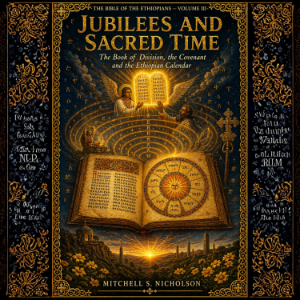
The Dead Sea Scrolls preserved fifteen copies of a book most Christians have never heard of. The Ethiopian church never stopped reading it. The Book of Jubilees opens on Sinai — but not the Sinai you know. An angel arrives. Not to deliver the Ten Commandments. To dictate something older: the complete history of creation, organized according to a fifty-year jubilee cycle, grounded in a 364-day solar calendar written on heavenly tablets before the world began. Fifteen Hebrew manuscripts were found among the Dead Sea Scrolls — more copies than most books of the Hebrew Bible. The Qumran community cited Jubilees by name as canonical authority and broke with the Jerusalem Temple over the calendar it mandates. Paul's most puzzling claim in Galatians — that the Law was given through angels — makes complete sense once you know this book. So does the Hebrews Melchizedek Christology. So does the jubilee announcement of Luke 4. And so does the Ethiopian church's solar calendar, its fifty-five-day Lent, and its twelve annual feasts for each archangel. The Ethiopian Orthodox Tewahedo Church never lost Jubilees. It reads it as the thirteenth book of its Old Testament — the eternal Law, the angelic governance of nations, the jubilee structure of history, the solar calendar as divine revelation. These are the foundations of the world that produced both the Dead Sea Scrolls and the New Testament, preserved in Ge'ez because one church in the mountains of East Africa never broke the chain. Jubilees and Sacred Time is Volume 3 of The Bible of the Ethiopians — the first comprehensive English-language series on the world's largest Christian Bible. Reading the New Testament without Jubilees is like reading Paul without understanding the Torah. The angel told Moses to write from the beginning of creation. The Ethiopian church kept what Moses wrote. The Dead Sea Scrolls confirmed it was real. It is time to read it. Duration - 10h 21m. Author - Mitchell S. Nicholson. Narrator - Mason. Published Date - Friday, 02 January 2026. Copyright - © 2026 Mitchell S. Nicholson ©.
Language:
English
Opening Credits
Duration:00:00:13
A NOTE ON TRANSLITERATION
Duration:00:01:54
PREFACE: The Thirteenth Book
Duration:00:09:45
PART ONE: THE TEXT AND ITS WORLD
Duration:00:00:03
Chapter 1 — The Little Genesis: What Jubilees Is and Why It Matters
Duration:00:00:14
1.1 A Book That Rewrites the Beginning
Duration:00:02:30
1.2 The Angel of the Presence and What He Carries
Duration:00:03:04
1.3 The Relationship to Genesis and Exodus
Duration:00:03:59
1.4 Why "Little Genesis"
Duration:00:01:58
1.5 Mets'hafe Kufale: The Ethiopian Canonical Title
Duration:00:03:24
1.6 The Argument of the Book in Its Own Terms
Duration:00:03:52
1.7 The Book That Explains the Ethiopian Calendar
Duration:00:02:44
1.8 Why It Matters Now
Duration:00:02:45
Chapter 2 — Writing Sacred History Again: Jubilees and Its Sources
Duration:00:00:10
2.1 The Art of Rewriting What Everyone Already Knows
Duration:00:02:21
2.2 The Compositional Question: Who Wrote Jubilees and When
Duration:00:03:16
2.3 The Rewritten Bible: Genre, Authority, and Canonical Ambition
Duration:00:02:50
2.4 The Specific Additions: What Jubilees Puts In
Duration:00:06:09
2.5 The Specific Omissions: What Jubilees Leaves Out
Duration:00:04:00
2.6 The Reframings: What Jubilees Changes Without Adding or Removing
Duration:00:03:02
2.7 The Theological Concerns Behind the Compositional Method
Duration:00:02:49
2.8 Dating the Book: The Maccabean Crisis and Its Aftermath
Duration:00:03:04
2.9 The Jubilees Author as Exegete
Duration:00:02:44
Chapter 3 — Before Sinai: The Heavenly Tablets and the Eternal Law
Duration:00:00:17
3.1 The Problem with Sinai
Duration:00:03:17
3.2 The Heavenly Tablets: What They Are and What They Contain
Duration:00:03:29
3.3 Before Abraham: The Patriarchs and the Pre-Sinaitic Law
Duration:00:04:06
3.4 The Angels and the Eternal Law
Duration:00:02:39
3.5 The Implications for Understanding the Torah
Duration:00:05:22
3.6 The Eternal Law and the Ethiopian Canonical Reading
Duration:00:03:38
3.7 Mastema and the Violation of the Eternal Law
Duration:00:03:38
3.8 The Heavenly Tablets and the New Testament
Duration:00:03:35
3.9 What the Eternal Law Means for Reading the Bible
Duration:00:03:22
Chapter 4 — From Hebrew to Ge'ez: The Transmission History
Duration:00:00:24
4.1 The Question of Survival
Duration:00:03:12
4.2 The Hebrew Original: Evidence and Character
Duration:00:03:43
4.3 The Qumran Community and Jubilees
Duration:00:02:35
4.4 The Greek Intermediary: Lost but Not Gone
Duration:00:03:14
4.5 The Ge'ez Translation: Date, Context, and Character
Duration:00:03:52
4.6 The Ge'ez Manuscript Tradition of Jubilees
Duration:00:04:15
4.7 R. H. Charles and the First Critical Edition
Duration:00:02:43
4.8 VanderKam and the Post-Qumran Critical Edition
Duration:00:03:05
4.9 The Fidelity of the Ge'ez: What the Comparison Reveals
Duration:00:03:54
4.10 The Manuscript Tradition and the Digital Future
Duration:00:03:02
4.11 What the Transmission History Means for the Ethiopian Canonical Tradition
Duration:00:02:51
PART TWO: THE THEOLOGY OF JUBILEES
Duration:00:00:04
Chapter 5 — Sacred Time: The Jubilee Cycle and the Structure of History
Duration:00:00:13
5.1 Time as Revelation
Duration:00:02:30
5.2 The Mathematics of the Jubilee
Duration:00:04:55
5.3 The Seven-Week Structure Within Each Jubilee
Duration:00:03:11
5.4 How the Jubilee Cycle Organizes Sacred History
Duration:00:05:32
5.5 The Jubilee Cycle and the 364-Day Solar Calendar
Duration:00:05:29
5.6 Time as Revelation: The Theological Transformation
Duration:00:04:31
5.7 The Jubilee Cycle and the Ethiopian Calendar Tradition
Duration:00:03:01
5.8 The Jubilee Year and Social Ethics
Duration:00:02:45
5.9 The Jubilee Cycle in the New Testament
Duration:00:03:43
5.10 The Structure of All Time
Duration:00:03:51
Chapter 6 — The Solar Calendar: Divine Order Against Lunar Accommodation
Duration:00:00:19
6.1 The Calendar as Theological Battleground
Duration:00:03:01
6.2 The 364-Day Calendar: What It Is and Why It Matters
Duration:00:04:41
6.3 The Jubilees Calendar and the Astronomical Book: A Canonical Conversation
Duration:00:04:36
6.4 The Condemnation of the Lunar Calendar
Duration:00:04:31
6.5 The Qumran Community and the Calendar Rupture
Duration:00:05:45
6.6 The Calendar Theology and the Ethiopian Canonical Tradition
Duration:00:07:26
Chapter 7 — Angels, Nations, and the Governance of History
Duration:00:00:24
7.1 The Political Theology of the Heavenly Court
Duration:00:03:11
7.2 The Seventy Nations and Their Angelic Princes
Duration:00:04:12
7.3 Israel's Exception: Direct Divine Governance and Its Demands
Duration:00:04:45
7.4 The Animal Apocalypse's Seventy Shepherds: A Canonical Conversation
Duration:00:04:45
7.5 Paul's Principalities and Powers: The New Testament Inheritance
Duration:00:05:47
7.6 The Ethiopian Canonical Tradition and Angelic Political Governance
Duration:00:08:19
Chapter 8 — The Patriarchs Rewritten: Abraham, Isaac, Jacob, and Joseph in Jubilees
Duration:00:00:16
8.1 What It Means to Rewrite a Patriarch
Duration:00:02:57
8.2 Abraham: The First Observer of the Solar Calendar
Duration:00:07:23
8.3 Isaac: The Model of Priestly Purity
Duration:00:04:45
8.4 Jacob: The Recipient of Heavenly Revelation
Duration:00:06:42
8.5 Joseph: The Prototype of the Righteous Sufferer
Duration:00:06:56
8.6 The Patriarchal Transmission Chain and Its Theological Function
Duration:00:06:25
Chapter 9 — Covenant, Purity, and the Boundaries of Israel
Duration:00:00:22
9.1 The Logic of Boundaries
Duration:00:02:31
9.2 The Intermarriage Prohibition: The Sharpest Boundary
Duration:00:06:04
9.3 Circumcision: The Body as Covenant Document
Duration:00:05:08
9.4 Purity and Pollution: The Jubilees Extension of the Levitical System
Duration:00:05:03
9.5 The Social World Behind the Boundaries
Duration:00:04:54
9.6 The Boundaries in the Ethiopian Canonical Tradition and the New Testament
Duration:00:09:24
PART THREE: JUBILEES IN THE ETHIOPIAN TRADITION
Duration:00:00:05
Chapter 10 — Canonical Jubilees: The Thirteenth Book of the Ethiopian Old Testament
Duration:00:00:20
10.1 What It Means to Be the Thirteenth Book
Duration:00:04:52
10.2 The Canonical Block of Primordial Revelation
Duration:00:04:51
10.3 Liturgical Use: How Jubilees Functions in Ethiopian Church Services
Duration:00:06:37
10.4 The Andemta Commentary Tradition on Jubilees
Duration:00:09:05
10.5 Jubilees and the Ethiopian Theology of the Mosaic Revelation
Duration:00:06:58
10.6 The Thirteenth Book and the Canonical Unity of the Ethiopian Bible
Duration:00:05:42
Chapter 11 — The Ethiopian Calendar and the Jubilees Tradition
Duration:00:00:19
11.1 A Calendar That Is Also a Confession
Duration:00:03:43
11.2 The Structure of the Ethiopian Year: Thirteen Months and What They Mean
Duration:00:04:39
11.3 The Alexandrian Inheritance and the Jubilees Canonical Grounding
Duration:00:04:38
11.4 The Major Feasts and Their Solar Theology
Duration:00:07:06
11.5 The Fasting Calendar: Bodily Participation in Sacred Time
Duration:00:05:30
11.6 Living Within the Jubilees Time Structure: Calendar and Community Formation
Duration:00:08:39
Chapter 12 — Jubilees and Ethiopian Theology: Covenant, Angels, and Sacred History
Duration:00:00:30
12.1 What Jubilees Contributes That Nothing Else Quite Does
Duration:00:03:05
12.2 The Eternal Law and the Ethiopian Theology of Revelation
Duration:00:07:10
12.3 Angelic Governance and the Ethiopian Political Theology
Duration:00:06:53
12.4 The Jubilee Structure of History and Ethiopian Historical Consciousness
Duration:00:06:09
12.5 The Solar Calendar as Divine Revelation and the Integration with Volume 2's Enochic Tradition
Duration:00:05:41
12.6 The Canonical Integration: Jubilees, 1 Enoch, and the Ethiopian Theological Tradition as a Whole
Duration:00:09:30
PART FOUR: JUBILEES AND THE WIDER WORLD
Duration:00:00:04
Chapter 13 — Jubilees and the Dead Sea Scrolls: The Fifteen Manuscripts
Duration:00:00:29
13.1 What a Shepherd's Stone Changed
Duration:00:04:08
13.2 The Fifteen Manuscripts: Distribution, Dates, and Physical Character
Duration:00:06:18
13.3 What the Hebrew Reveals: The Text's Composition and the Ge'ez Comparison
Duration:00:06:07
13.4 The Damascus Document's Citation: Jubilees as Named Authority
Duration:00:04:15
13.5 The Community Rule, 4QMMT, and the Jubilees Legal Tradition
Duration:00:05:09
13.6 The Jubilees Calendar at Qumran: Institutional Consequences
Duration:00:06:00
13.7 The Angelic Governance Tradition in the Qumran Documents
Duration:00:06:13
13.8 What Qumran Confirms and What It Cannot Tell Us
Duration:00:06:35
Chapter 14 — Jubilees and the New Testament: The Hidden Conversation
Duration:00:00:20
14.1 The Conversation That Has Been Happening All Along
Duration:00:03:28
14.2 Galatians 3:19 and the Angelic Mediation of the Law
Duration:00:07:12
14.3 The Elementary Spirits: Galatians 4 and Colossians 2
Duration:00:07:25
14.4 Hebrews and the Covenant Theology of the Heavenly Tablets
Duration:00:08:11
14.5 Revelation's Angels of the Nations and the Jubilees Governance Framework
Duration:00:06:59
14.6 Reading the New Testament with Both Eyes Open
Duration:00:09:00
Chapter 15 — Jubilees and the Church Fathers: Reception, Rejection, and Survival
Duration:00:00:22
15.1 The Story of a Disappearance
Duration:00:02:57
15.2 The Fathers Who Read Jubilees
Duration:00:06:01
15.3 The Text in the Greek-Speaking Church: Citation, Use, and Early Ambivalence
Duration:00:04:07
15.4 Jerome, the Hebrew Canon, and the Decisive Canonical Move
Duration:00:05:11
15.5 Augustine, the Sethites, and the Calendar Theology
Duration:00:06:39
15.6 The Western Exclusion: Institutional and Theological Mechanics
Duration:00:04:32
15.7 Epiphanius, Syncellus, and the Greek Fragments
Duration:00:05:13
15.8 The Coptic and Syriac Connections: The Path to Ethiopia
Duration:00:04:34
15.9 The Pattern and Its Meaning
Duration:00:08:41
Chapter 16 — Jubilees in the Modern World: Scholarship, the Dead Sea Scrolls, and the Ethiopian Tradition
Duration:00:00:24
16.1 The Recovery of a Lost Book
Duration:00:03:38
16.2 R. H. Charles and the Foundation of Modern Jubilees Scholarship
Duration:00:05:28
16.3 The Dead Sea Scrolls Revolution: 1947 and Its Aftermath
Duration:00:05:35
16.4 VanderKam and the Hermeneia Commentary: The Definitive Scholarly Resource
Duration:00:06:21
16.5 The Current State of Jubilees Scholarship: Open Questions and New Directions
Duration:00:07:31
16.6 What the Ethiopian Church Knows That the Rest of Us Are Still Learning
Duration:00:13:08
EPILOGUE: The Book of Division and the Undivided Truth
Duration:00:17:57
A Request
Duration:00:05:17
Ending Credits
Duration:00:00:19